Features
Each feature, how far it got, and the report that measured it.
Live run end to end in the real appBuilt in the branch heads, covered by testsPartial some of itPlanned specified, not built
The reports are written in the project’s working tree; they are not in the repository yet, so they are named, not linked.
Agent in the viewport
LiveA chat agent drives the scene by running Python in a sandbox. Plan Mode writes a plan and waits for Approve. Questions (ask_user) appear as choice or text bubbles and resume the model. Checkpoints rewind the conversation. Cancel and reattach work.
Run live through the real client: a plan, Approve, done; a question answered; a bronze sphere placed.
Measured in the harden report.
Your own inference
BuiltProviders: Anthropic (API key), any OpenAI-compatible endpoint, OpenRouter (budget ceiling checked before every call), ChatGPT plan via Sign in with ChatGPT, and opt-in local CLI adapters. A Providers dialog sets the main model, the swarm models and the image models, saved with 0600 permissions and applied live.
OpenRouter is live. The ChatGPT plan route is built to OpenAI’s documented protocol; its live test is waiting for one consent click. The local CLI adapters are off by default: they run the codex or claude you are already logged into, as you, and never read their credential files. For Claude, Anthropic’s terms do not permit third-party apps to route requests through plan credentials on behalf of their users; treat it as personal use and read the terms.
Measured in the server report.
Swarm (v3)
LiveThe agent starts parallel workers, each a headless Blender process. A worker’s result reaches your scene only through a typed, fenced commit (epoch, fence token, hash checks, receipts); a failed worker lands nothing. The Parallel Agents panel shows one card per worker. Up to six workers per swarm.
Live: three workers on OpenRouter models, and all three collections landed. Not yet run on the Claude CLI adapter.
Measured in the studios report.
Studios in the Client, with a confirm gate
BuiltTripo (mesh, texture, PBR, Smart UV, free regeneration actions) is the one 3D studio with a driver, run through your signed-in studio tab. Higgsfield (image, video, motion transfer; not a 3D studio) is used through Lampway’s own MCP client and OAuth sign-in. The flow is plan, then your click: the plan reads back every setting and the price; only a click from you starts a spend; a hung job is never re-clicked; nothing can change privacy.
Tripo’s read-only state call ran against the real tab. A read-only live diff of Higgsfield’s tool schemas and model catalogue reported no mismatches (53 models); the rest is tested against a fake built from the recorded schemas. No generation has been run on either studio. Hyper3D, Meshy and Hi3D are specified; no driver is written.
Measured in the studios and video report.
Image and video generation
Live
OpenRouter image models per purpose (plates, masks, concepts, tiles) and a video catalogue (29 models in the snapshot) with a price estimate before submit, a per-job cap and a ledger cap. A job is never resubmitted. Video presets: bulk, loop, motion transfer, upscale.
Live: one 5-second clip billed $0.05 against a $0.10 estimate; one image $0.067. Seedance’s price formula has not been checked against a real bill. A prompt library of 18 built-in templates (7 video, 11 image) sits under it: typed variables, per-model adapters, versions that never overwrite, A/B by variant_of, every run logged with rating, cost and gates.
Measured in the video report.
Mesh QA with typed decisions
LiveFinds open loops and floating shells, draws them per piece, takes your red, green and yellow strokes as rulings, and proposes verdicts rules first: each reason names its rule, and only the ambiguous candidates are left to a model. A proposal never writes a ruling.
Live: reproduced a recorded chest (91 candidates, the recorded strokes read back).
Measured in the harden report.
Game-armour pipeline
Partial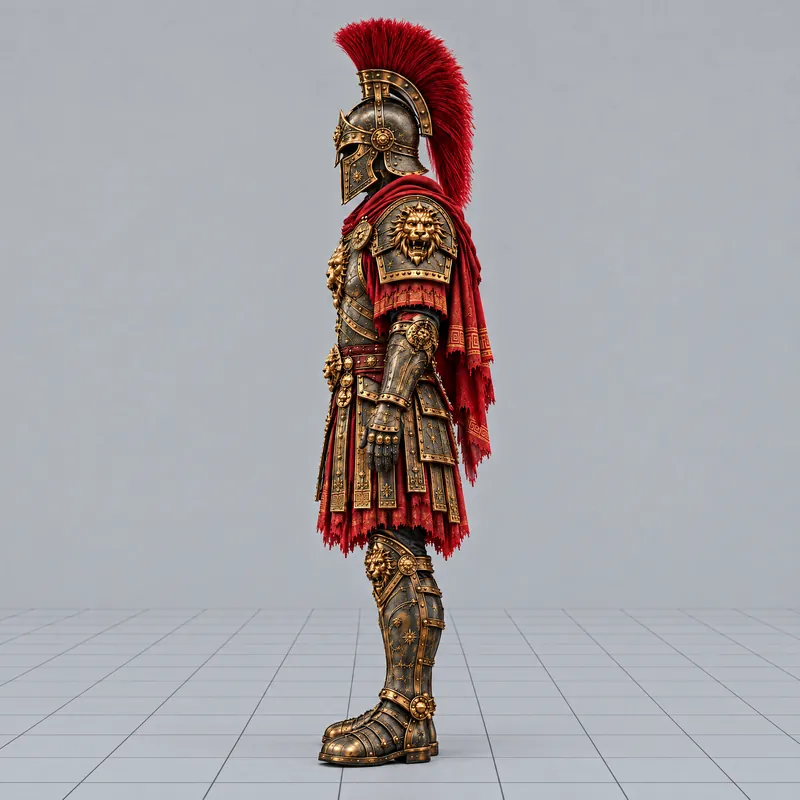
Seeds, plates, Smart UV, mesh QA, parts, mesh-paint texturing (four clay views, silhouette-ranked picks, projection), a rebuild loop, PBR merge, proportion scoring and an FBX export package with textures and a README of hashes.
Mesh-paint and the rebuild loop ran live on a real piece. Wave 2 has since landed plate_pick/plate_prep, seed_catalog, seed_audit, piece_ratios, uv_score, uv_texel_density, mesh_defect_scan, silhouette_compare, fit_place and fit_openings (by commit message; not re-run for this page). Weight transfer, bind, fit validation and the engine-import check are planned (Wave 3).
Measured in the tools report.
Connect AI apps (MCP)
LiveAny MCP app can drive your open scene. The server offers 58 tools (56 Lampway tools plus run_blender_python and scene_summary) and the client adds its own scene and UI tools. Studio tools that spend credits are not offered over MCP.
The real stdio launcher listed 56 tools in total against an earlier build. The server has since been renamed and extended, so that total is not today’s count, and the recording is being refreshed.
Measured in the features report.
Hardening
BuiltA sandbox that gates file reads and writes by resolved path, a loopback bridge that checks the peer’s user id, Host and Origin guards, redacted logs, a per-provider spend policy, telemetry off by default.
Fourteen findings and their fixes are tabulated in the report.
Measured in the harden report.
Animation from multi-view AI video
Planned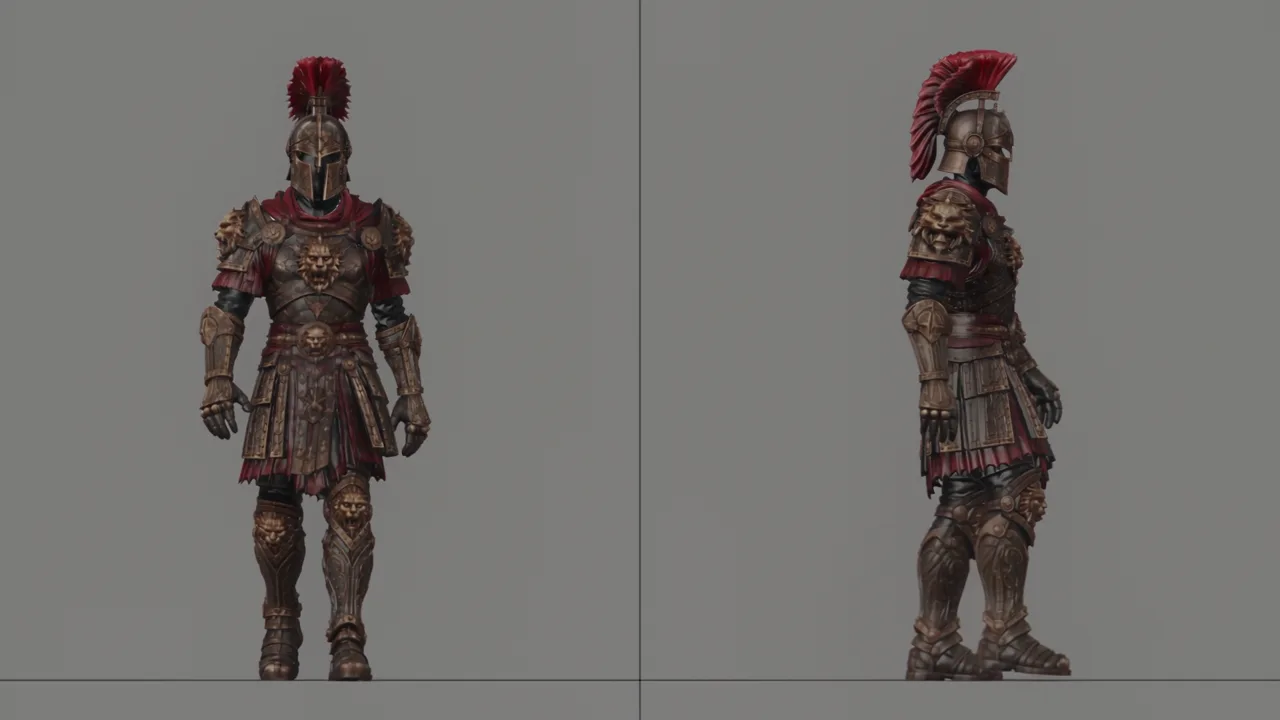
A split-screen front and side clip, per-panel 2D joints, orthographic triangulation, a silhouette check, loop and export. Wave 4.
What exists today: video generation, motion transfer and the side-track prompt template, and clip experiments that use them. The tracker, retarget and loop export are not built.
Measured in the features report.